


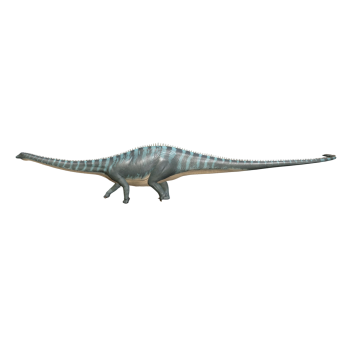
Diplodocus (3D animated model)
Diplodocus is a dinosaur of the genus Diplodocus in the family Diplodocus. The neck is very long, the head is very small, and the position of the nostrils is higher than the eyes; the front of the mouth has flat teeth, and the sides and back are toothless; the limbs are thick, the forelimbs are short, and the hind limbs are long; the hips are higher than the front shoulders; the palms have 5 fingers (toes); the tail is longer than the neck, gradually tapering to the end, whip-shaped, with more than 10 human characters in the middle. Because the top of the herringbone protrudes from two protrusions like double beams, it is named Shuanglianglong, usually called Diplodocus.

Lianglong skeleton
Lianglong is a dinosaur belonging to the family Lianglong in the order Saurischia. The neck is long, the head is small, and the position of the nostrils is higher than the eyes; The front of the mouth has flat teeth, while the sides and back have no teeth; Strong limbs, short forelimbs, long hind limbs; The buttocks are higher than the front shoulders; Each palm has 5 fingers (toes); The tail is longer than the neck and gradually narrows towards the end, forming a whip like shape, with over 10 human bones in the middle. The name Shuanglianglong comes from two protrusions that protrude from the top of the human character bone, resembling double beams, and is commonly referred to as Lianglong.

Lianglong skull fossil
Lianglong is a dinosaur belonging to the family Lianglong in the order Saurischia. The neck is long, the head is small, and the position of the nostrils is higher than the eyes; The front of the mouth has flat teeth, while the sides and back have no teeth; Strong limbs, short forelimbs, long hind limbs; The buttocks are higher than the front shoulders; Each palm has 5 fingers (toes); The tail is longer than the neck and gradually narrows towards the end, forming a whip like shape, with over 10 human bones in the middle. The name Shuanglianglong comes from two protrusions that protrude from the top of the human character bone, resembling double beams, and is commonly referred to as Lianglong. Living in western North America during the late Jurassic period. Living in groups, when there is a shortage of local food, they collectively migrate to distant places. Plant eating, feeding on leaves and ferns.

Popular Models
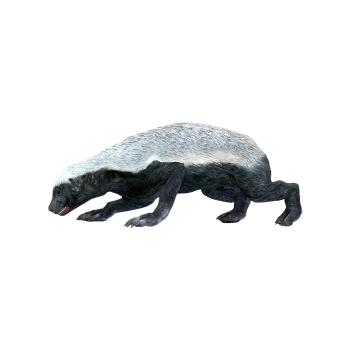
Honey Badger (3D animated model)
199 View
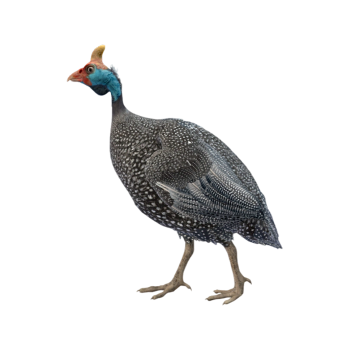
Guinea fowl (3D animated model)
168 View
Wild Goose (3D animated model)
190 View
Red Fox (3D animated model)
158 View
Random Model



Riverbed gravel
923 View
